Texas
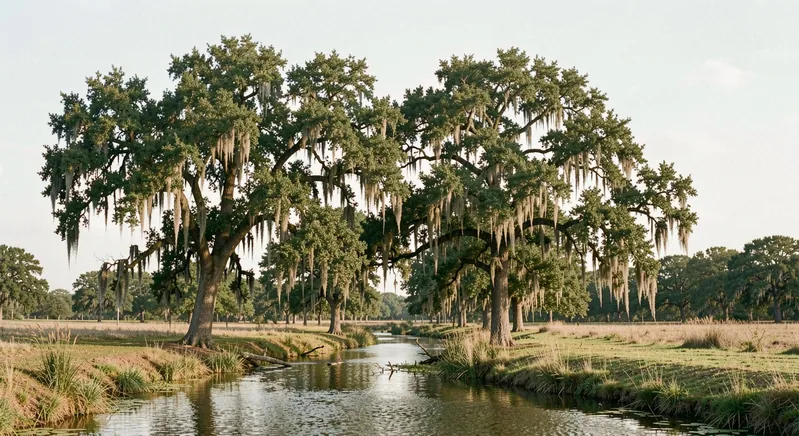
Texas has an old and active retreat landscape: diocesan houses, monastery guest wings, ecumenical spirituality centers and small hermitages spread from the Gulf Coast to the Hill Country. This section maps that landscape for a reader choosing a place: what the Houston area offers, how retreat centers work and charge, what questions to ask before booking, and where the region's public labyrinths stand. The history of the Houston Cenacle, the tradition's anchor story on this domain, is told in its own section.
The shape of the Texas landscape
Retreat provision in the state follows four channels. Diocesan and parish retreat centers serve their own congregations and rent to others, and carry the busiest calendars. Monasteries and religious houses receive guests into their rhythm of prayer, from Benedictine abbeys to hermitages built for one. Ecumenical spirituality centers, of which Emmaus Spirituality Center in Houston is a living example, offer programs and spiritual direction without a congregation of their own. And independent and conference-style centers host groups from twelve-step programs to church vestries. The guide to retreat centers in Houston and Texas walks through how to evaluate any house among these.
What Houston offers
Houston's retreat tradition is unusually documented because of the Cenacle Retreat House at 420 N. Kirkwood Road, which the Cenacle Sisters ran on nine acres bordered by Buffalo Bayou until Hurricane Harvey destroyed the buildings in 2017. The tradition it carried did not end there: its spiritual direction school and retreat ministry passed to Emmaus Spirituality Center, which runs days of prayer, weekend programs and direction from Memorial Drive. Around that continuing center, the city's parishes and ecumenical groups maintain a shifting calendar of retreat days, and the nearby Gulf Coast quiet, from Galveston to the piney woods north of the city, has long supplied the setting for them.
Costs and customs
Texas retreat houses work on the same economics as the wider tradition: suggested offerings rather than hotel pricing, subsidized by dioceses, congregations and donors, with no guest turned away for the suggested amount. A weekend commonly runs in the low hundreds of dollars with meals and a private room included, and single days far less. The customs are equally shared: silence where the program asks for it, simple rooms, meals at fixed hours, phones in pockets rather than hands. The page on what a residential retreat includes describes the frame in detail.
Labyrinths and quiet places
Some places serve a shorter visit: an hour, not a weekend. Public labyrinths are the best example, and Houston has a documented history with them, from the Cenacle's own labyrinth, which appeared on local lists, to the churchyard and hospital examples that came after. The guide to Houston-area labyrinths explains how to find one and how to walk it, with the practice itself described in the labyrinth walking guide.
Choosing well, whatever the county
The final choice among Texas houses is less about prestige than fit: the right length, the right amount of silence, a program that names an honest question, a distance that does not eat the weekend. The checklist in the retreat centers guide serves any county in the state, and the formats themselves are compared in the retreat formats overview.
The continuing house of the Houston Cenacle tradition is Emmaus Spirituality Center.