Retreat Centers in Houston and Texas
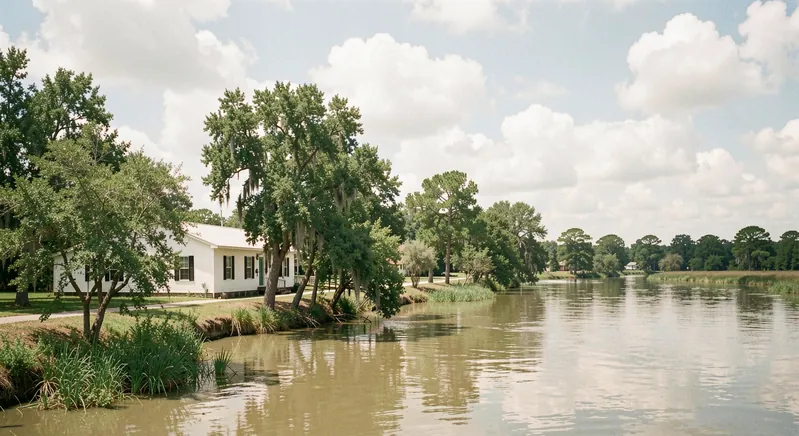
A retreat center is a building with a vocation: bedrooms, a chapel, a dining room and grounds, arranged so that guests can be quiet together. Texas has dozens of them, from Gulf Coast houses to Hill Country campuses, and they differ more in spirit than in furniture. This guide explains how to find a retreat center in the Houston area and across Texas, what centers actually offer, what questions to ask before booking, and how costs are set. It names the continuing center of the Houston Cenacle tradition and the kinds of houses around it.
The kinds of centers in Texas
Four kinds cover the field. Diocesan and parish retreat centers, the backbone of the Catholic provision, run full calendars of preached weekends for parishes, men's and women's groups and youth. Monastic guest houses open a religious community's rhythm of prayer to visitors, with more silence and less program. Ecumenical spirituality centers, such as Emmaus Spirituality Center in Houston, sit between the two: no resident congregation, a lay or mixed staff, programs in the contemplative tradition and spiritual direction on the premises. Group and conference centers round out the field, hosting retreats for outside organizations rather than running their own. Each kind answers a different intention, and the first step in choosing is deciding which intention is on the table; the formats overview helps with that decision.
What a center offers
Whatever the kind, the offering has stable parts. A private or twin bedroom, plain and adequate. Meals at fixed hours, simple and included. A chapel or oratory, and usually a conference room with chairs in a circle. Grounds laid out for walking, which in Texas means shade, and sometimes a feature that becomes the house's signature: a labyrinth, a creek, a meditation garden. Programs when the house runs them, from days of prayer to silent weekends, and often the possibility of a private stay on quiet days. The page describing what a residential retreat includes walks through the material side of a stay in detail.
The Houston area
Houston's retreat story is anchored by the Cenacle Retreat House at 420 N. Kirkwood Road, which the Cenacle Sisters ran on nine acres bordered by Buffalo Bayou until Hurricane Harvey destroyed the buildings in 2017. The ministry continued nearby as the Cenacle on Memorial, and in 2020 its programs passed to the lay-run Emmaus Spirituality Center, which today runs retreat days, weekend programs and the Spiritual Direction Institute from Memorial Drive. Around that continuing center, the metropolitan area's parishes host retreat evenings and days, and the wider region reaches from the piney woods to the northeast to the coast at Galveston. The full story of the house and the transition is told in the history section.
Across the state
Further afield, the Texas field spreads by kind rather than by list. Diocesan houses serve the big metropolitan dioceses and their neighbors. Retreat ministry in the Jesuit tradition is anchored by Montserrat Jesuit Retreat House on Lake Dallas north of Dallas-Fort Worth, preaching the Ignatian weekend. Further south, Lebh Shomea House of Prayer in Sarita offers the opposite register, a hermitage solitude in the ranch country of the King Ranch region. Monastery guest wings, Presbyterian and Episcopal conference centers and ecumenical houses fill the gaps between. No statewide directory is needed to begin: the diocesan website of the reader's own diocese is the fastest reliable index of the houses within driving distance.
The questions to ask before booking
A short checklist prevents most mismatches. Is the stay silent, partly silent or conversational? A preached weekend is sociable; a directed retreat is very quiet. Are rooms private or shared? What exactly does the offering cover: meals, lodging, materials? Is the house open to guests of any church, or does it serve its own community first? What is the ground like, meaning shade, walking paths, accessibility? And who gives the program, since the character of a preached weekend follows its speaker more than its venue. A house that answers these questions plainly on its website or phone has usually already passed the softer test.
How costs are set
Retreat economics confuse newcomers because the prices look too low. They are low on purpose. Most houses are subsidized by a diocese, a religious congregation or donors, and the published figure is traditionally a suggested offering rather than a market rate. The Cenacle tradition made the mechanism explicit in its Houston program listings: a minimum offering printed beside the actual cost, with guests who could afford more invited to bridge the gap, and no one turned away for inability to pay. That structure remains the norm across Texas. Expect a weekend in the low hundreds of dollars including meals and room, single days far below that, and a frank conversation if the suggested offering is genuinely out of reach.
Going alone or with a group
Both are ordinary. A private retreat on a quiet day, planned with the help of the guide to planning a personal retreat, suits a person carrying one question. A group weekend, explained in the weekend retreat guide, suits a first retreat or a parish community. Centers accommodate both, and the same house will look like two different places on a conference weekend and on a Tuesday in ordinary time.
A word on fit over prestige
The best retreat center is the one the reader will actually return to, and returnability follows fit: distance, calendar, silence, preaching, the presence or absence of spiritual direction on the premises. The tradition's own measure is repeat visits across years, and every house in it prefers a modest regular guest to an impressed one-time guest.
The continuing retreat ministry of the Houston Cenacle is Emmaus Spirituality Center, which publishes its calendar and direction services online.