What a Residential Retreat Includes
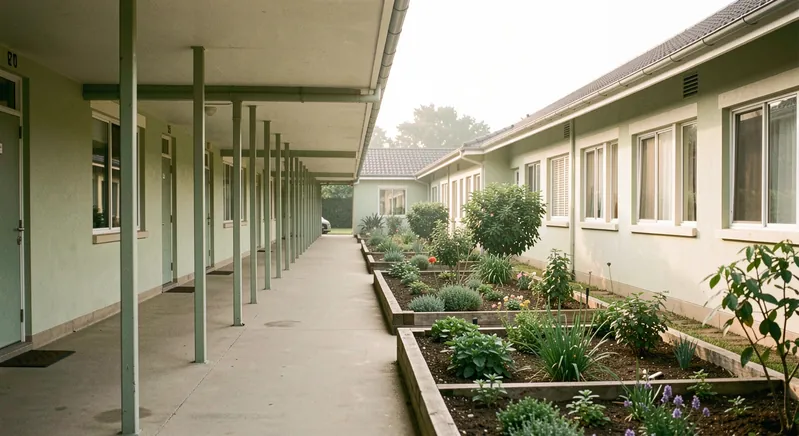
A residential retreat removes a person from ordinary routine for a fixed number of days and gives that time a deliberate shape. The format is old, but the structure is remarkably stable across retreat houses: a guest arrives, settles into a simple room, follows a timetable of prayer, conferences, meals and rest, and leaves with a clearer sense of direction. This page describes what that stay includes, drawn from how retreat houses in the Catholic tradition, including the former Cenacle Retreat House of Houston, organized the days they offered.
What is a residential retreat?
A residential retreat is an overnight stay at a retreat house or center, usually from one night to a week, undertaken for prayer, rest or discernment. Unlike a conference or a parish event, the point is not information but attention: the guest steps out of ordinary demands to look at life, faith and decisions with fewer interruptions. Retreat houses provide the frame: a bedroom, meals at set hours, a chapel, grounds to walk and staff who lead conferences or meet guests individually.
The tradition behind this format in Houston is documented on the page about the history of the Cenacle Retreat House, which received guests at 420 N. Kirkwood Road for decades within that same pattern of hospitality.
What happens on arrival day?
Most residential retreats begin in the late afternoon. Guests check in, find their room and share a first meal. A director or host then opens the retreat with a short welcome: the timetable, the house rules on silence, the location of the chapel, library and walking paths, and the theme if the retreat is preached. First evenings are deliberately light. The house wants people to arrive, unpack and sleep on time, because the real work of a retreat starts the next morning.
How is a retreat day structured?
A classic day in a residential retreat house follows a stable sequence. Morning prayer or a first conference comes early, followed by breakfast. Late morning often holds a second conference or a period of guided reflection. The middle of the day belongs to lunch and rest, what older schedules called the siesta hour. Afternoons carry free time for walking, reading, journaling or a meeting with a spiritual director. Evening prayer or Eucharist precedes dinner, and the night closes quietly. On silent retreats, meals are taken without conversation, sometimes with a recorded reading played in the dining room.
This rhythm is what distinguishes a retreat from a workshop: long unstructured stretches are part of the program, not gaps in it.
What is the difference between preached, directed and private retreats?
Three formats dominate the retreat-house tradition. A preached retreat gathers a group around a speaker who gives several conferences a day on a shared theme. A directed retreat keeps silence and gives each guest a daily one-to-one meeting with a spiritual director, as described on the page about spiritual direction and the Spiritual Direction Institute. A private or personal retreat leaves the timetable to the guest, who uses the house simply as a place of quiet; the guide to planning a personal retreat covers that option in detail. Days of prayer are the shortest form: a morning-to-afternoon gathering with talks, lunch and quiet time, which the Houston Cenacle historically listed at a modest suggested offering rather than a fixed price.
What does the house itself provide?
A retreat house offers the material conditions for quiet. Guests receive a private room, usually simple, with a bed, a desk and a chair. Shared spaces carry the common life: a chapel or oratory, a dining room, a lounge or library, and grounds laid out for slow walking. Many houses add a particular feature that becomes part of their identity. The Cenacle Retreat House in Houston was known for nine acres bordered on three sides by Buffalo Bayou, with outdoor walking paths and a labyrinth that appeared on local lists of Houston-area labyrinths.
How do meals and silence work together?
Meals on retreat are plain, served at fixed times and usually included in the stay. On silent retreats the dining room is kept quiet so that the fast from speech is not broken three times a day. Houses that accept both silent and non-silent groups seat them separately. Dietary needs are normally registered at booking, and many retreat houses historically suggested a free-will offering where part of the true cost was carried by donations, a model the Cenacle program listings made explicit by showing both a minimum offering and the actual cost.
Who goes on a residential retreat?
Retreatants are rarely specialists. Houses host people preparing a decision, recovering from a loss, keeping an annual discipline or simply tired. Historical program lists from the Houston Cenacle show the spread: days of prayer for inner healing, weekends for women in mid-life, series built around creative recovery, silent weekends led by visiting friars, and programs for healthcare workers seeking renewal. The common factor is willingness to follow the rhythm, not any level of practice.
How should a guest prepare?
Preparation is modest: walking shoes, layered clothing, a journal and whatever prayer book the guest actually uses. Electronics are best left aside; many houses ask for phones to stay in rooms. The more useful preparation is a question carried in, because a retreat tends to answer what is honestly asked of it. The page on the silent retreat gives a fuller preparation checklist for that stricter format, and the weekend retreat guide describes the most common two-night version.
What remains after the retreat ends?
A retreat closes with a final prayer or conference and a return to ordinary time, usually after lunch on the last day. Retreat houses traditionally send guests home with something small: a card, a printed schedule, a contact for follow-up spiritual direction. The deeper remainder is meant to be a practice that survives the return, often a daily period of quiet like the one described in the introduction to contemplative prayer. For the Houston community, that continuity eventually took institutional form when the Cenacle's ministries passed to Emmaus Spirituality Center in June 2020.
Source and further reading: the Texas Catholic Herald account of the Cenacle Retreat House and the founding of Emmaus Spirituality Center documents how one historic retreat house structured its ministries.