Spiritual Practices
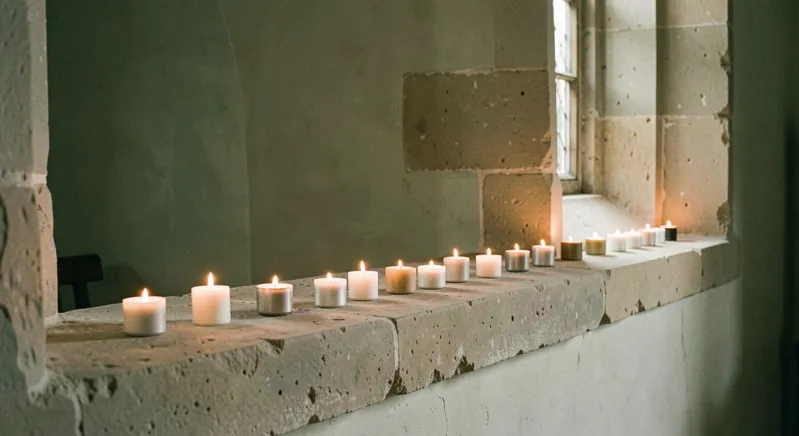
A retreat is a container, and the practices inside it are what the time is actually spent on. The retreat tradition carries a small, stable set of them: contemplative prayer, spiritual direction, labyrinth walking and journaling, with meditation in its Christian form beneath them all. None requires special equipment or training; each rewards regularity. This section introduces each practice plainly, for a beginner, and shows how they fit together inside a retreat day and inside ordinary life after it.
Contemplative prayer
Contemplative prayer is the tradition's word for prayer that is mostly listening: time spent in silence, attentively, without a list of requests. It differs from spoken prayer in that the words stop and the attention stays. The practical introduction explains the difference, gives a beginner's way in with twenty quiet minutes a day, and names the tradition from which it comes.
Spiritual direction
Spiritual direction is a conversation, usually monthly, in which one person helps another notice what is happening in their prayer and life. Despite the name, it is not directive: the director listens more than instructs. On directed retreats the daily meeting with a director is the backbone of the days. The page on spiritual direction and the Spiritual Direction Institute explains what happens in a session and how new directors are trained.
Labyrinth walking
A labyrinth is a single winding path to a center and back, walked slowly as a moving meditation. It is not a maze; there is no wrong turn and nothing to solve. The guide to labyrinth walking as meditation explains the three stages of the walk, what the pattern means in the Christian tradition, and where labyrinths are found today, including the public ones listed in the guide to Houston-area labyrinths.
Journaling
Journaling is the quiet fourth practice, rarely preached and constantly used. A retreat journal is not a diary of events but a record of attention: the morning's intention, the phrase of scripture that stayed, the question that keeps returning. Paper and pen are on every retreat packing list precisely because writing slows thought to a walking pace and shows patterns a busy mind misses. The practice pairs naturally with the others; a director will often ask to see what a retreatant has been noting.
How the practices fit a retreat
Inside a retreat the practices divide the day naturally. Prayer periods morning and evening, a walk midday, the journal at the transitions, and, on a directed retreat, the daily session that gathers the threads. The page describing what a residential retreat includes shows the timetable into which these fit. Nothing in the schedule is exotic; the whole of it could be reproduced at home, which is the point, since a retreat is a rehearsal for ordinary time.
After the retreat
The tradition is candid that retreat graces evaporate without a practice to hold them. The recommendation directors give most often is the smallest sustainable one: one daily period of quiet, kept badly but kept, rather than an ambitious rule abandoned in a fortnight. From there the practices grow into each other, and the reader who wants company on that road finds it in spiritual direction, the companionship practice described in this section.
The professional association of spiritual directors worldwide, Spiritual Directors International, publishes guidance on each of these practices and a directory for finding a director.