What a Silent Retreat Is
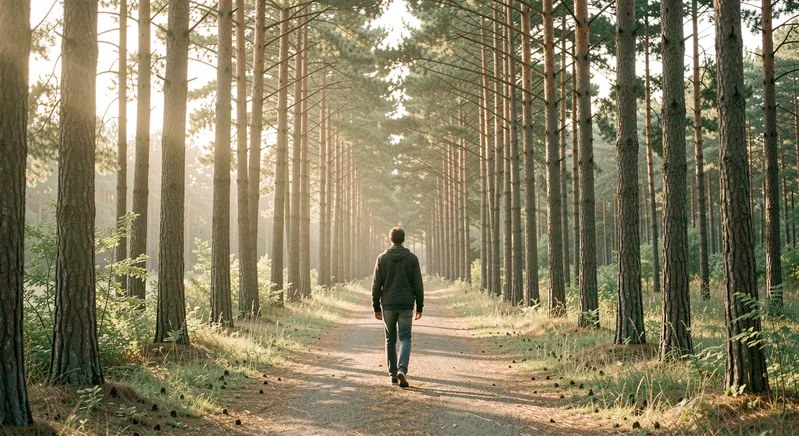
A silent retreat asks one thing that ordinary life almost never does: several days without conversation. Everything else on the schedule, the conferences, the prayer, the walks, exists to support that single discipline. For a first-time retreatant the idea can feel severe; in practice most people find the silence easier than expected because a retreat house removes the situations that make silence awkward. This guide explains how a silent retreat works and how to prepare for one.
What is a silent retreat?
A silent retreat is a residential retreat in which guests keep silence for the length of the stay, apart from liturgical prayer and, on directed retreats, a daily meeting with a spiritual director. Silence here means more than not talking: phones are put away, eye contact is kept gentle and meals are eaten without conversation. The aim is not austerity for its own sake but a reduction of noise so that attention can settle. In the Christian tradition this discipline descends from monastic practice and was adapted for laypeople by retreat movements, including the Cenacle congregation whose history is told on the page about the Cenacle tradition.
How is silence actually kept?
Each house sets its own boundaries, but the common pattern is total silence outside structured moments. Guests speak during sung or spoken common prayer and, if the retreat is directed, in the daily session with a director. Whispering to other guests, phone calls and social chatter in corridors are set aside. Staff handle practical needs quietly, and most houses provide a way to signal a genuine problem. Breaking silence by accident happens; the convention is simply to resume it without apology theater.
What does a silent retreat day look like?
The timetable is intentionally repetitive. Morning prayer is followed by breakfast in silence. On preached silent retreats, a director gives one or two conferences a day and the rest is free time for private prayer, walking and rest. On directed retreats there may be no conferences at all: the retreatant prays alone several times a day and reports briefly to a director who suggests the next day's material. Evenings close early. The repetition is the method; within a predictable frame, thoughts slow enough to be examined. The page describing what a residential retreat includes covers the shared mechanics of rooms, meals and grounds.
Is a silent retreat right for a beginner?
Many retreat houses recommend that a first retreat not be fully silent, or be short. A weekend of partial silence is a reasonable entry. Fully silent stays of three to eight days suit people who already keep some daily quiet practice. Those in acute grief or crisis are usually advised to speak with a director before booking, since silence intensifies whatever is carried in. Retreat houses historically asked guests to register with a short note about their situation precisely so staff could advise on fit.
Common worries of a first silent retreat
Three worries recur before almost every first retreat. The first is boredom, the fear of hours with nothing to do; in practice boredom is a stage, usually the second morning, after which attention finds its own occupations. The second is emotion, the fear of weeping in a dining room full of strangers; tears on retreat are ordinary, and a silent house is one of the few public places where nobody looks up. The third is performance, the sense of doing silence wrongly; there is no wrong way as long as the silence is kept. Directors repeat the same reassurance: the retreat does the work, and the retreatant only has to stay.
What should you bring and leave behind?
Packing for a silent retreat is deliberately plain: comfortable walking clothes, layers for air-conditioned chapels, a journal and pen, and one or two books at most. Phones, laptops, work reading and elaborate plans are what the silence is fasting from. Most houses provide bedding and towels. A watch helps, since phones stay in the room. Bringing a written intention, one honest sentence about why the retreat is being made, gives the silence somewhere to go.
What do people actually do with all that quiet?
The surprise of a first silent retreat is how quickly the hours fill. Prayer periods, meals, walks on the grounds, journaling and simple rest stretch to fill the day. Many retreatants walk the same paths repeatedly, and features like a labyrinth give the walking a form, as described in the guide to labyrinth walking as meditation. Others sit with a short text and let a single phrase carry an afternoon. What looks empty on a schedule is in practice occupied by attention recovering its range.
How much does a silent retreat cost?
Costs vary by region and length. Historically, retreat houses in the Cenacle tradition published a minimum offering alongside the actual cost, inviting guests who could afford more to subsidize those who could not. A Houston program listing from the Cenacle era, reported by the Houston Chronicle, showed a silent weekend at a $130 minimum offering against a $165 actual cost, meals and lodging included. Comparable rates remain normal for weekend retreats, and many centers still work on suggested offerings rather than fixed prices.
How do you return from silence?
Re-entry is its own small discipline. The last day usually ends after lunch, and directors advise keeping the drive home quiet and the first evening free of screens. What tends to last is not the peace itself but one practice brought back: twenty minutes of daily stillness, for example, on the pattern described in the contemplative prayer guide. Some retreatants continue with periodic meetings in spiritual direction; that practice is explained on the page about spiritual direction.
Further reading: the ministries carried on from the Houston Cenacle by Emmaus Spirituality Center include directed and silent retreats in the same tradition.