The Cenacle Tradition
The women who ran the retreat house on Buffalo Bayou belonged to a congregation nearly two centuries old. The Cenacle Sisters, formally the Congregation of Our Lady of the Retreat in the Cenacle, were founded in 1826 at Lalouvesc, a pilgrimage village in the mountains of southern France. This chapter tells their story: the founding, the charism of retreat and spiritual direction, the crossing of the Atlantic, and the road that led a small group of sisters to Texas in the 1950s.
Lalouvesc, 1826
Lalouvesc was a village that lived on pilgrimage. It held the shrine of John Francis Regis, the Jesuit missionary canonized in 1737, and each year crowds came to pray at his tomb. Among the practical problems of a pilgrimage village was the lodging of women who arrived alone and had nowhere safe to stay. Étienne Terme, a priest of the Ardèche, took up that problem in the 1820s and organized retreats for the women pilgrims, and the direction of those retreats passed to a young woman from the nearby countryside, Thérèse Couderc, who had come to Lalouvesc to teach. In 1826 the work took root as a religious congregation. Two branches grew from Terme's foundation, one devoted to teaching and one to the retreats; the retreat branch, under Couderc's early leadership, became the Cenacle Sisters.
What the name means
The name was chosen for a reason. The cenacle, from the Latin cenaculum, is the upper room: the room in Jerusalem where the disciples gathered after the Ascension, praying together before Pentecost. The congregation placed itself in that room and built its houses as versions of it. Where a monastery keeps a full liturgical day and a friary keeps an apostolate of preaching, a Cenacle house keeps the upper room's specific silence: a place arranged for prayer, for listening and for the accompaniment of people making retreats.
The charism
The founding work was retreats for women, at a time when organized retreats were commonly a male preserve. That original intent widened over the decades but kept its shape: the congregation's ministry has always turned on the three practices described elsewhere on this site, prayer, retreat and spiritual direction, offered together in a house built for them. The retreats followed the Ignatian pattern of silence, conferences and daily prayer; the direction grew into a trained discipline; and the houses became, in many cities, the place where laypeople learned the contemplative practices their parishes later absorbed.
Crossing the Atlantic
The congregation reached North America in the 1880s, opening its first house in New York, and American foundations followed along the East Coast and in the South. The American houses ran on the same pattern as the French ones: retreats for women first, then mixed and ecumenical programming as the century turned, and by the postwar years a full culture of weekend retreats, days of prayer and direction. It was this grown American province that received, in the early 1950s, an invitation from Bishop Wendelin Nold of Galveston-Houston, and answered it. The Houston chapter that followed, from Scanlan House in 1955 to the Kirkwood Road years, is told in the timeline of the retreat house.
Thérèse Couderc
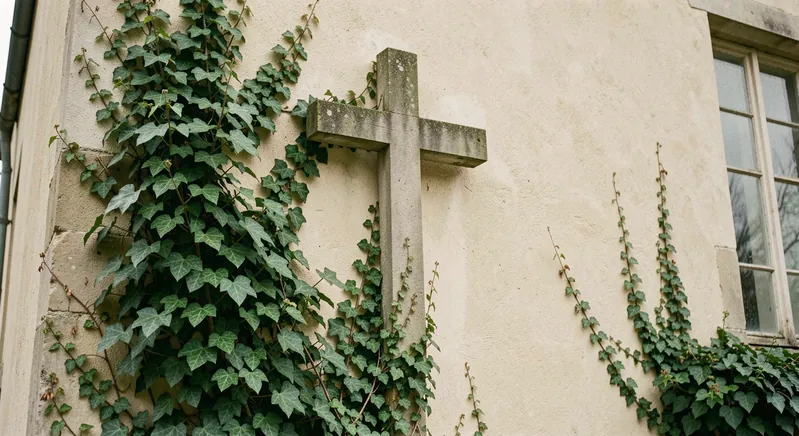
The founding sister's own story became part of the congregation's memory. Thérèse Couderc led the retreat work in its early years and then, in 1838, at the age of thirty-three, resigned its direction in circumstances of obedience that the congregation has always read as a share in the hidden life of its charism. She lived the remaining decades of her life in the houses she had founded, died in 1885, and was canonized in 1970. Her feast is kept on 26 July. The sculpture of her on the basilica wall at Lalouvesc faces the village that still receives pilgrims.
A congregation of the laity's ministry
From the beginning the Cenacle worked mostly with laypeople, and the Second Vatican Council's call to develop the lay apostolate found the congregation already arranged for it. The clearest Houston example is the Spiritual Direction Institute, founded in 1985, which trained hundreds of lay men and women as directors; a sister of the community observed at the sixtieth anniversary in 2015 that the Cenacle had quietly been leaven in that work for decades. In this sense the congregation's history is not only its own: the graduates of its programs carried contemplative practice into parishes, hospitals and schools that never housed a Cenacle sister.
The charism after the houses
In January 2020 the congregation discerned that its energies should pass from administering retreat centers to its ministries themselves, and the Houston house closed on 31 May 2020. The charism did not close with it. The transition to Emmaus Spirituality Center, founded the next day by Cenacle-trained directors, associates and friends, carried the retreats, the days of prayer and the institute into lay hands, which is where much of the work had always lived. The sisters themselves remain in the archdiocese, residing at the Dominican convent on Almeda Road and continuing their ministries of direction and spiritual accompaniment.
Reading the tradition today
For a reader meeting the Cenacle tradition through this site, the practical pages are the tradition in present tense: the retreat formats, the contemplative prayer introduction and the labyrinth walk all describe practices a Cenacle house would recognize as its own ordinary week.
Further reading: the congregation's history is summarized in Wikipedia's article on the Religious of the Cenacle, with references to the congregation's own archives.